Galina Font: A Balanced Choice for Designers Seeking Elegance and Versatility
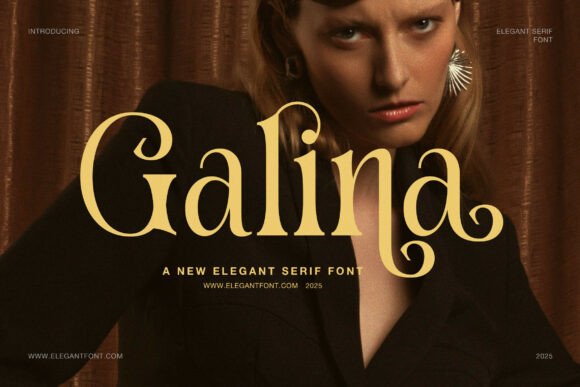
Galina is a typeface that blends classic structure with artistic flair, making it an appealing option for designers looking to create visually engaging typography. With its tall letters, smooth contrast between thick and thin strokes, and clean serif structure, Galina offers a versatile solution for both traditional and creative design projects.
The font’s uppercase letters are bold and confident, while the lowercase characters are soft, slim, and elegant. This contrast allows for dynamic visual hierarchy in text, whether used in headlines or body copy. Additionally, Galina includes beautiful alternates and ligatures, which can elevate the uniqueness of a design without requiring significant effort from the designer.
Why Consider Galina?
Designers may be drawn to Galina for several reasons. First, its curled terminals on certain letters—such as a, g, y, and t—add a distinctive, artistic touch that can make a logo or wordmark feel more custom. These details are subtle yet impactful, helping to differentiate a design from generic typefaces.
Second, the clean serif structure ensures readability, even at larger sizes. This makes Galina suitable for display text, such as headlines, banners, or signage, where legibility is crucial. The balance between elegance and clarity is one of the key strengths of this font.
Third, the inclusion of alternates and ligatures provides flexibility. Designers can use these features to fine-tune their compositions, creating unique variations without having to manually adjust each character. This can save time and enhance the overall quality of the design.
Benefits and Tradeoffs
The primary benefit of using Galina is its ability to deliver a polished, professional look with minimal effort. Its combination of classic and artistic elements allows it to fit into a wide range of design contexts, from corporate branding to editorial layouts.
However, there are some considerations to keep in mind. While the curled terminals add visual interest, they may not be suitable for all design styles. In minimalist or modern contexts, these embellishments could appear too ornate or detract from the intended aesthetic.
Additionally, although Galina is highly readable in large formats, its decorative elements might reduce legibility in smaller text sizes. For body copy or long-form content, a simpler sans-serif or serif font might be more appropriate.
Situations Where Galina Is a Strong Fit
Galina excels in situations where a balance between elegance and creativity is desired. It is particularly well-suited for:
- Logo Design: The curled terminals and unique alternates allow for custom wordmarks that stand out while maintaining a classic feel.
- Headlines and Display Text: The bold uppercase letters and clean structure make it ideal for titles, banners, or other large-scale typographic elements.
- Branding Materials: From business cards to packaging, Galina can contribute to a cohesive and sophisticated brand identity.
In these scenarios, the font’s versatility and visual appeal can enhance the overall impact of the design.
When Alternatives May Be Worth Considering
While Galina has many strengths, it may not be the best choice in every situation. Designers should consider alternatives when:
- Minimalism is Key: If the design requires a clean, unembellished look, a more straightforward serif or sans-serif font may be preferable.
- Legibility is Critical: For small text or dense body copy, fonts with simpler forms and fewer decorative elements are often more effective.
- Modern or Tech-Inspired Designs: In contexts that prioritize futuristic or high-tech aesthetics, a more geometric or minimalist font might align better with the overall vision.
Evaluating the specific needs of the project will help determine whether Galina is the right choice or if another font would be more suitable.
Practical Insights for Decision-Making
When deciding whether to use Galina, consider the following questions:
- Does the design require a balance of elegance and artistic detail? If so, Galina’s curled terminals and alternates could be a strong asset.
- Will the font be used primarily for display text or in smaller formats? Keep in mind that its decorative elements may affect readability in certain contexts.
- Is the goal to create a unique, custom look, or to maintain a more standard, professional appearance? Galina’s versatility allows it to serve both purposes depending on how it is applied.
By answering these questions, designers can make informed decisions about whether Galina aligns with their goals and the requirements of their project.
Ultimately, Galina is a thoughtful addition to any designer’s toolkit. Its blend of tradition and artistry, combined with practical features like alternates and ligatures, makes it a compelling choice for those seeking a font that is both expressive and functional.