Decoding Vaasa: A Strategic Guide to Uppercase-Only Display Typography
In the rapidly evolving landscape of visual communication, selecting the right typeface is rarely a matter of simple preference; it is a strategic decision that dictates brand perception, readability, and overall design hierarchy. Among the myriad of options available to designers, Vaasa has emerged as a distinct choice for those seeking high-impact visual statements. Unlike standard text fonts designed for body copy or long-form reading, Vaasa is engineered specifically to command attention. It represents a specialized category of decorative display typography that prioritizes artistic personality over functional versatility in sentence construction.
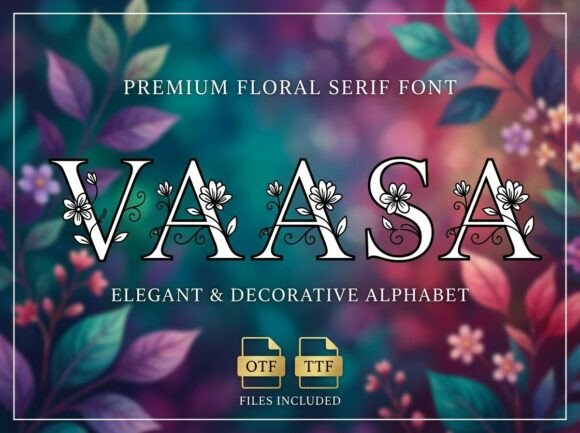
Understanding the specific nature of Vaasa requires moving beyond traditional font classifications. This typeface is not merely an aesthetic addition but a deliberate tool for breaking away from the ordinary. Its unique artistic elements and strong visual personality make it ideal for creators who need their work to stand out immediately. However, its utility comes with specific constraints that must be understood before integration into a project. The core characteristic of Vaasa is its exclusive use of uppercase letters. This limitation is not an oversight but a fundamental design philosophy intended to create a cohesive, bold, and polished finish for headlines, logos, and decorative applications.
The Distinctive Architecture of Vaasa
What sets Vaasa apart from standard serif or sans-serif families is its commitment to being a center of attention. Every letterform within this font is crafted with the intention of being a work of art. The strokes are often exaggerated, and the negative space is manipulated to create a sense of movement and drama. When used correctly, Vaasa transforms a simple headline into a graphic element itself. This makes it particularly effective in scenarios where the text needs to carry the weight of the entire composition.
The font's versatility lies in its ability to maintain a professional polish despite its decorative nature. While many display fonts can appear chaotic or amateurish if misused, Vaasa balances its artistic flair with structural integrity. This balance allows it to function well in creative packaging, where shelf presence is critical, and in artistic logos, where memorability is paramount. The fact that it includes both OTF (OpenType Font) and TTF (TrueType Font) files ensures that it is compatible with advanced layout software like Adobe InDesign as well as universal devices and web browsers. This dual-format support provides flexibility for professionals working across different technical environments without sacrificing quality.
Understanding the All-Caps Constraint
A critical factor in evaluating Vaasa is its restriction to uppercase characters. Designers accustomed to flexible typefaces that offer full case sensitivity may initially find this limiting. However, this constraint is actually a feature that enforces a specific level of discipline in design. Because Vaasa does not include lowercase letters, it forces the designer to focus on the rhythm and spacing of capital letters, which often creates a more uniform and powerful visual block. This approach is historically rooted in signage and poster design, where legibility at a distance relies on consistent character heights.
For projects requiring mixed-case text, such as blog posts, emails, or instructional manuals, Vaasa is simply not the correct tool. Attempting to force this font into body text would result in poor readability and a disjointed user experience. Therefore, the decision to use Vaasa hinges entirely on the scope of the project. If the goal is to create a striking title, a logo mark, or a large-scale banner, the all-caps format becomes a strength rather than a weakness. It ensures that every letter carries equal visual weight, preventing the eye from skipping over smaller characters.
Evaluating Vaasa Against Alternative Approaches
When comparing Vaasa to other design resources, it is essential to look at the broader categories of typography. There are three primary ways designers typically approach bold, decorative headings: using a standard bold weight of a versatile font family, utilizing a variable font, or selecting a dedicated display typeface like Vaasa.
- Standard Bold Weights: Many designers opt to simply increase the weight of a standard sans-serif or serif font (e.g., Helvetica Bold or Times New Roman Bold). While these options are highly readable and versatile, they often lack the unique "personality" that Vaasa offers. They tend to blend into the background rather than dominating it. Vaasa provides a distinct identity that generic bold fonts cannot replicate.
- Variable Fonts: Variable fonts allow for continuous adjustment of weight, width, and slant. While technically impressive and incredibly efficient for web performance, they often lack the specific, hand-crafted artistic details found in static display fonts. Vaasa offers a fixed, curated aesthetic that variable fonts might dilute by trying to be too adaptable.
- Dedicated Display Typefaces: This is the direct comparison category. Other display fonts exist, but many suffer from being either too ornate for modern branding or too generic to leave a lasting impression. Vaasa occupies a middle ground, offering a strong visual statement that remains professional and polished.
The tradeoff here is clear. By choosing a specialized font like Vaasa, you gain immediate visual impact and uniqueness. In exchange, you lose the flexibility to use the font for general communication. This is a common theme in typography: specialization yields better results in specific contexts, while generalization serves a wider range of uses. For a project where the headline is the hero, the specialization of Vaasa is a superior investment compared to a general-purpose font.
Strategic Applications and Best-Fit Scenarios
To make an informed decision about whether Vaasa fits your current project, consider the specific requirements of your deliverable. The font excels in situations where the message is short, the audience is visually engaged, and the context allows for artistic interpretation.
- Bold Headlines and Cover Art: For magazine covers, book titles, or website hero sections, Vaasa can serve as the primary anchor. Its uppercase nature ensures that the text is legible even when scaled down or viewed from a distance. The unique shapes of the letters add a layer of intrigue that encourages the viewer to stop and read.
- Artistic Logos and Brand Marks: Logos require a strong, memorable identity. Vaasa’s decorative elements can be leveraged to create custom wordmarks that feel bespoke. Since logos are rarely set in lowercase, the all-caps restriction aligns perfectly with industry standards for branding.
- Creative Packaging: Product packaging competes for attention in a crowded marketplace. Using Vaasa for product names or key selling points on a box or bottle can differentiate a brand from competitors who stick to standard typography. The font's polished finish ensures that the product looks premium and high-quality.
- Decorative Initials and Accents: Even though the font is all-caps, it can be used creatively for drop caps or initial letters in editorial layouts. The artistic nature of the characters adds a touch of elegance and sophistication that standard fonts cannot match.
When to Choose Alternatives
Despite its strengths, there are numerous scenarios where Vaasa would be a poor choice. If a project involves a significant amount of text, such as a brochure with detailed descriptions, a website with extensive navigation menus, or any content intended for accessibility compliance, Vaasa should be avoided. Screen readers and users with visual impairments rely on standard letterforms and consistent casing to process information quickly. An all-caps display font disrupts this flow and can cause cognitive fatigue.
Furthermore, if the design brief requires a minimalist or understated aesthetic, Vaasa might be too loud. Its "stunning" and "decorative" qualities are designed to break the mold, which can clash with designs that aim for subtlety or neutrality. In these cases, a clean, neutral sans-serif or a classic serif would provide the necessary foundation without competing with the imagery or the message.
Making the Final Decision
Selecting Vaasa is ultimately a question of alignment between the font's capabilities and the project's goals. It is a tool for creators who want to break away from the ordinary and prioritize visual impact above all else. The inclusion of both OTF and TTF formats ensures that the transition from concept to final output is smooth, regardless of the software stack being used.
Before purchasing or downloading, it is vital to review the file specifications and understand the all-caps limitation. This knowledge prevents frustration during the design process and ensures that the font is applied in a way that maximizes its potential. When used with intent and precision, Vaasa transforms standard text into a compelling visual narrative. It is not just a font; it is a statement piece that demands to be seen.
For professionals weighing their options, the advice is to audit the project's needs first. If the requirement is a versatile type system for multiple languages and text weights, Vaasa will not suffice. However, if the goal is to create a singular, powerful moment of visual communication—a logo, a headline, or a package—Vaasa stands out as a robust and distinctive solution. By understanding these nuances, designers can ensure they are making choices that enhance their work rather than constrain it.